Tinnitus, commonly described as a persistent ringing, buzzing, or high-pitched tone in the ears, affects millions of people worldwide. While it can be mildly annoying for some, it becomes a debilitating and anxiety-provoking experience for others. If you’ve been struggling with tinnitus and are searching for meaningful, lasting relief without the false promise of a “quick cure” this post is for you.
As someone who’s walked this road both professionally and personally, I want to introduce you to one of the most effective tools for managing tinnitus-related distress: Cognitive Behavioral Therapy, or CBT. Let’s explore how CBT can help you shift your relationship with tinnitus, reduce emotional distress, and improve your quality of life.
My Journey with Tinnitus: From Despair to Discovery
I’ll never forget one night lying in bed, exhausted yet wide awake, with nothing but a shrill, relentless sound echoing in my ears. It felt like a siren stuck on repeat. I wasn’t just losing sleep, I was losing hope. The more I resisted the sound, the louder it seemed. Panic took over. I kept thinking, “Am I going to live with this forever?”
What I didn’t know back then was that I had fallen into a neurological feedback loop, a cycle where my emotional reaction to tinnitus made it feel even worse. What finally broke that cycle wasn’t a magic cure. It was CBT, a structured and research-backed approach that changed everything.
What Is Cognitive Behavioral Therapy (CBT)?
Cognitive Behavioral Therapy (CBT) is a psychological treatment that helps individuals recognize and change negative thinking and behavioral patterns. It’s highly structured, practical, and solution-focused. Instead of dwelling on the past, CBT helps you focus on the present—and gives you actionable tools to regain control.
When it comes to tinnitus relief, CBT doesn’t aim to eliminate the sound. Instead, it teaches you how to change the way you relate to the sound, thereby reducing its emotional and psychological impact.
Why CBT Works for Tinnitus
Tinnitus can trigger a wide range of negative emotions—anxiety, frustration, helplessness. These feelings often amplify your perception of the sound, creating a vicious cycle of stress and sensitivity.
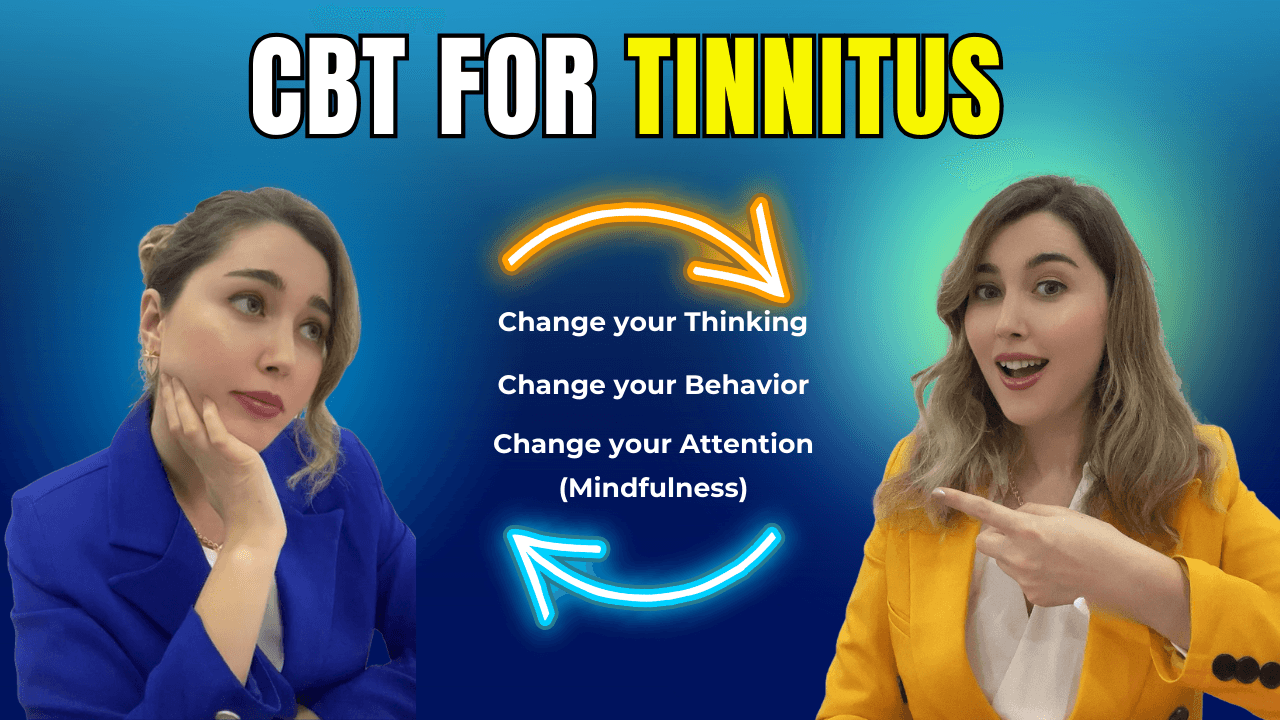
CBT helps break this cycle in three key ways:
1. Changing How You Think About Tinnitus
Many people experience automatic, catastrophic thoughts like:
- “This is unbearable.”
- “What if it never goes away?”
- “I can’t live like this.”
CBT helps you identify, challenge, and replace these thoughts with more balanced perspectives:
- “I’ve managed before. I can manage again.”
- “Tinnitus is annoying, but it’s not dangerous.”
- “I can shift my focus and live a full life.”
This change in thinking reduces panic, helplessness, and the feeling of being trapped by the sound.
2. Changing Behavior
People often respond to tinnitus by:
- Avoiding silence
- Withdrawing from social situations
- Constantly masking the sound with noise
These behaviors, while understandable, reinforce the idea that tinnitus is a threat. CBT encourages gentle re-engagementwith normal life activities—going to quiet places, enjoying hobbies, reconnecting with people so that you retrain your brain to see tinnitus as neutral, not threatening.
3. Changing Your Focus and Attention
Your brain naturally tunes in to what it sees as a threat. With tinnitus, this leads to hyper-awareness. CBT uses mindfulness and attention training to help you broaden your focus and redirect it to more calming, engaging experiences.
Key CBT Techniques for Tinnitus Relief
If you’re ready to take the first step toward regaining control over your tinnitus, here are five practical CBT strategiesyou can start today:
1. Deep Breathing for Anxiety Reduction
Tinnitus-related anxiety often fuels the distress cycle. Deep breathing helps calm your nervous system.
How to practice:
- Inhale slowly through your nose for 4 seconds
- Hold the breath for 4 seconds
- Exhale slowly through your mouth for 6 seconds
- Repeat for 2–5 minutes daily
This simple technique soothes your mind and body, making it easier to face tinnitus with calmness.
2. The 5-4-3-2-1 Grounding Exercise
This exercise helps you reconnect with the present and pull your focus away from the tinnitus.
Try this:
- 5 things you can see (lamp, notebook, book…)
- 4 things you can touch (fabric, wood, metal…)
- 3 things you can hear besides tinnitus (birds chirping, fridge hum…)
- 2 things you can smell (essential oil, lotion…)
- 1 thing you can taste (tea, mint…)
This multisensory practice grounds you and interrupts the hyper-focus on the ringing.
3. Progressive Muscle Relaxation
Stress and muscle tension can make tinnitus feel more intense. This exercise helps release tension throughout your body.
Steps:
- Start with your feet. Tense your muscles for 5 seconds, then release.
- Move to your calves. Tense, then relax.
- Continue through your thighs, stomach, arms, and face.
Notice the contrast between tension and relaxation. This helps reduce your overall arousal level.
4. Five-Finger Breathing
This calming technique combines breathing with tactile sensation and movement.
How to do it:
- Hold one hand out like a star.
- With your other hand, trace each finger slowly.
- Inhale as you trace up one side, exhale as you trace down the other.
- Repeat across all five fingers.
It’s a soothing practice you can use anywhere—especially helpful during tinnitus spikes.
5. Guided Imagery & Visualization
Your brain is powerful. You can train it to focus on calming images instead of distress.
Try this:
- Sit or lie down in a comfortable space.
- Visualize a peaceful place: a beach, forest, or cozy room.
- Use all five senses to imagine the details: what do you see, hear, smell, feel, and taste?
- Let the peaceful emotions settle in your body.
This helps you associate mental calmness with physical relaxation, reducing tinnitus awareness.
CBT in Practice: The Tinnitus Thought Log
To truly benefit from CBT, you need to track your patterns. I recommend creating a simple thought log:
- Tinnitus Trigger
What situation made you notice your tinnitus more? (e.g., lying in bed) - Thoughts and Emotions
What were you thinking or feeling? (e.g., “It’s louder tonight, I’ll never fall asleep.”) - Challenge the Thought
Ask: Is it 100% true? What’s another way to look at this?
(e.g., “It feels louder, but I’ve handled this before. I can calm my body.”) - Behavioral Response
What helpful action did you take? (e.g., used deep breathing, read a book)
Keeping a log empowers you to track progress, challenge negative cycles, and build healthier habits.
How Effective Is CBT for Tinnitus?
You might be wondering—does CBT really work for tinnitus relief?
The answer is yes. Multiple studies have shown that CBT can improve quality of life for tinnitus sufferers by 50–80%. While it doesn’t “cure” tinnitus, it does significantly reduce its impact.
CBT is especially effective when combined with:
- Sound therapy
- Tinnitus retraining therapy (TRT)
- Hearing aids
- Mindfulness-based stress reduction
Together, these methods help desensitize your brain to the sound and reduce emotional suffering.
Acceptance: A Key Part of the Journey
One of the most powerful concepts in CBT for tinnitus is acceptance. Acceptance doesn’t mean giving up. It means letting go of resistance. When we stop fighting the sound and start changing how we relate to it, we make space for healing.
Mindfulness helps you:
- Observe tinnitus without panic
- Stay grounded in the present
- Make room for joy, meaning, and peace despite the sound
This shift in mindset can be life-changing.
Final Thoughts: Getting Your Life Back
Living with tinnitus doesn’t mean your life is on hold. With the right tools and mindset, you can reclaim your peace, confidence, and joy. CBT isn’t about suppressing the sound, it’s about learning how to live fully and freely, even with it in the background.
Whether you’re newly diagnosed or have been struggling for years, there is hope. Tinnitus does not define you. And with strategies like CBT, you are not powerless. You’re already taking the first step by educating yourself and seeking support.
If you found these techniques helpful, consider working with a tinnitus specialist or audiologist trained in CBT. You deserve to feel better and a more peaceful life is possible.
Prefer to watch instead? Here’s my quick video on CBT techniques for managing tinnitus!